
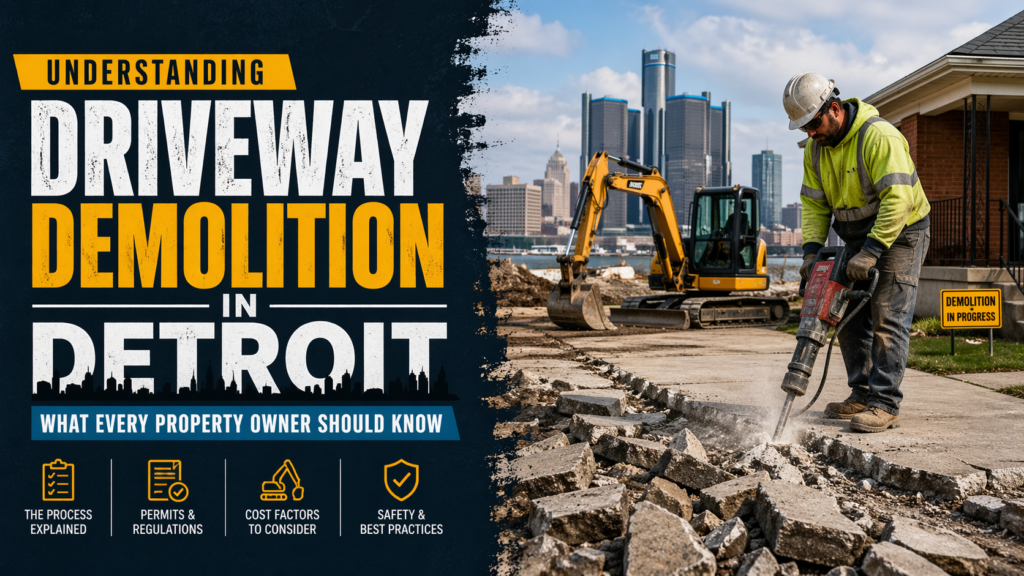
Driveways are one of the most used surfaces on any residential or commercial property, and over time, they take a considerable amount of punishment from Michigan’s harsh freeze-thaw weather cycles, vehicle traffic, tree root intrusion, and general wear. When a driveway Demolition Detroit reaches the end of its serviceable life, demolition becomes necessary before any new installation can begin. For Detroit property owners, understanding what driveway demolition involves and why it matters is an important first step in any property improvement project.
What Is Driveway Demolition?
Driveway demolition refers to the process of breaking up and removing an existing driveway surface, whether it is made of concrete, asphalt, brick pavers, or gravel. The goal is to completely clear the area so that a new surface can be properly installed. This process is not simply about smashing material apart it involves careful planning, proper equipment, and safe debris removal to prepare the site correctly.
The type of demolition method used largely depends on the material. Concrete driveways, which are common across older Detroit neighborhoods, are typically broken apart using jackhammers, hydraulic breakers, or skid steer attachments. Asphalt driveways, being more flexible and layered, are often removed using milling machines or excavators with specialized bucket attachments. In either case, the broken material is then loaded and hauled away for recycling or disposal.
Why Driveway Demolition Is Necessary Before Replacement
A common question property owners ask is whether a new driveway can simply be poured or paved over an old one. While overlay solutions do exist in some circumstances, they are generally a short-term fix and often lead to premature failure of the new surface. Proper demolition and full removal ensure that the base layer the compacted gravel or aggregate beneath the surface can be inspected, repaired, and rebuilt if needed.
In Detroit, the soil composition and drainage conditions vary significantly from neighborhood to neighborhood. Many older properties have outdated drainage systems beneath their driveways, and without removing the old surface, these issues remain hidden and unaddressed. Driveway demolition gives contractors the opportunity to identify and fix underlying problems before they become expensive repairs down the road.
The Driveway Demolition Process: Step by Step
Understanding the general stages of a driveway demolition project helps property owners know what to expect.
The process typically begins with a site assessment, during which the contractor evaluates the driveway’s material, thickness, size, and current condition. They also check for any underground utilities such as water lines, gas lines, or electrical conduits that may be located near or beneath the driveway. Utility marking is a critical safety step and is usually coordinated with Michigan’s MISS DIG system before any work begins.
Once utilities are cleared and the assessment is complete, the actual demolition begins. Heavy equipment such as jackhammers, mini excavators, or skid steers with breaker or cutting attachments are brought in to break the driveway into manageable sections. The broken material is then loaded into dump trucks and transported for recycling or proper disposal. Concrete is particularly recyclable and is often repurposed as aggregate fill material.
After demolition, the ground is inspected. If the sub-base is in poor condition showing signs of erosion, tree root damage, or poor compaction it must be repaired before any new surface is installed. This step is what separates a long-lasting driveway from one that cracks and crumbles within a few seasons.
Common Reasons Driveways in Detroit Need Demolition
Detroit’s climate is particularly tough on paved surfaces. Winter temperatures routinely drop below freezing, causing moisture trapped in the pavement to expand and contract repeatedly. This freeze-thaw cycle is one of the leading causes of driveway cracking, heaving, and surface deterioration.
Other common reasons for driveway demolition in the Detroit area include tree root damage from the many large mature trees found in older city neighborhoods, oil and chemical penetration that weakens the pavement structure, subsidence caused by poor compaction during the original installation, and general age-related deterioration in properties where driveways have not been replaced in decades.
In some cases, property owners choose demolition as part of a larger renovation or landscaping project. Changing the size, shape, or layout of a driveway for example, widening it to accommodate an additional vehicle or removing it entirely in favor of a different land use all require demolition as the first step.
Concrete vs. Asphalt Demolition: Key Differences
Both concrete and asphalt driveways are common in Detroit, and each material presents its own demolition considerations.
Concrete is a rigid material that requires mechanical breaking before it can be removed. It is typically thicker than asphalt and heavier per square foot, which means demolition takes more time and generates more debris by weight. However, concrete is highly recyclable, and many contractors in the Detroit area work with facilities that process and reuse it.
Asphalt is more flexible and tends to come up in large sheets or chunks rather than breaking into jagged pieces. It can also be recycled a significant environmental advantage since reclaimed asphalt pavement is routinely reprocessed and used in new road and driveway installations. The demolition process for asphalt is generally faster than for concrete but still requires proper equipment and disposal planning.
Environmental Considerations
Responsible driveway demolition in Detroit includes attention to how materials are handled and disposed of. Both asphalt and concrete are recyclable materials, and choosing contractors who prioritize recycling over landfill disposal contributes to a more sustainable outcome.
Additionally, the demolition process can disturb soil, create runoff, and expose the ground surface temporarily. In areas near drainage systems or natural features, erosion control measures may be needed during and immediately after demolition to prevent sediment from entering stormwater infrastructure.
What Happens After Demolition?
Once the old driveway has been completely removed and the sub-base inspected and corrected, the site is ready for the next phase. Depending on the property owner’s goals, this could mean the installation of a new concrete or asphalt driveway, the laying of paver systems, or even the conversion of the area into a landscaped or green space.
Proper demolition sets the foundation literally for whatever comes next. Skipping or cutting corners on this step often leads to problems with the new surface within a short period, including cracking, uneven settling, and drainage issues.
Final Thoughts
Driveway demolition in Detroit is a necessary and well-understood process that serves as the essential starting point for any driveway improvement project. The combination of Michigan’s challenging climate, the age of many Detroit-area properties, and evolving property needs make driveway demolition a common and routine part of property maintenance throughout the city and surrounding metro area. Understanding the process from site assessment to debris removal helps property owners approach the project with realistic expectations and a clearer picture of what goes into getting a driveway properly replaced.